Tripped Circuit Breaker: What It Means and What to Do
A circuit breaker that's tripped has cut the power to one circuit on purpose, because something crossed a safe limit.
Reset it once and it may well stay on. If it trips straight back, that's the board telling you there's a fault worth finding.
If resetting doesn't hold, call (02) 9054 3079 and we'll get to the bottom of it with you.
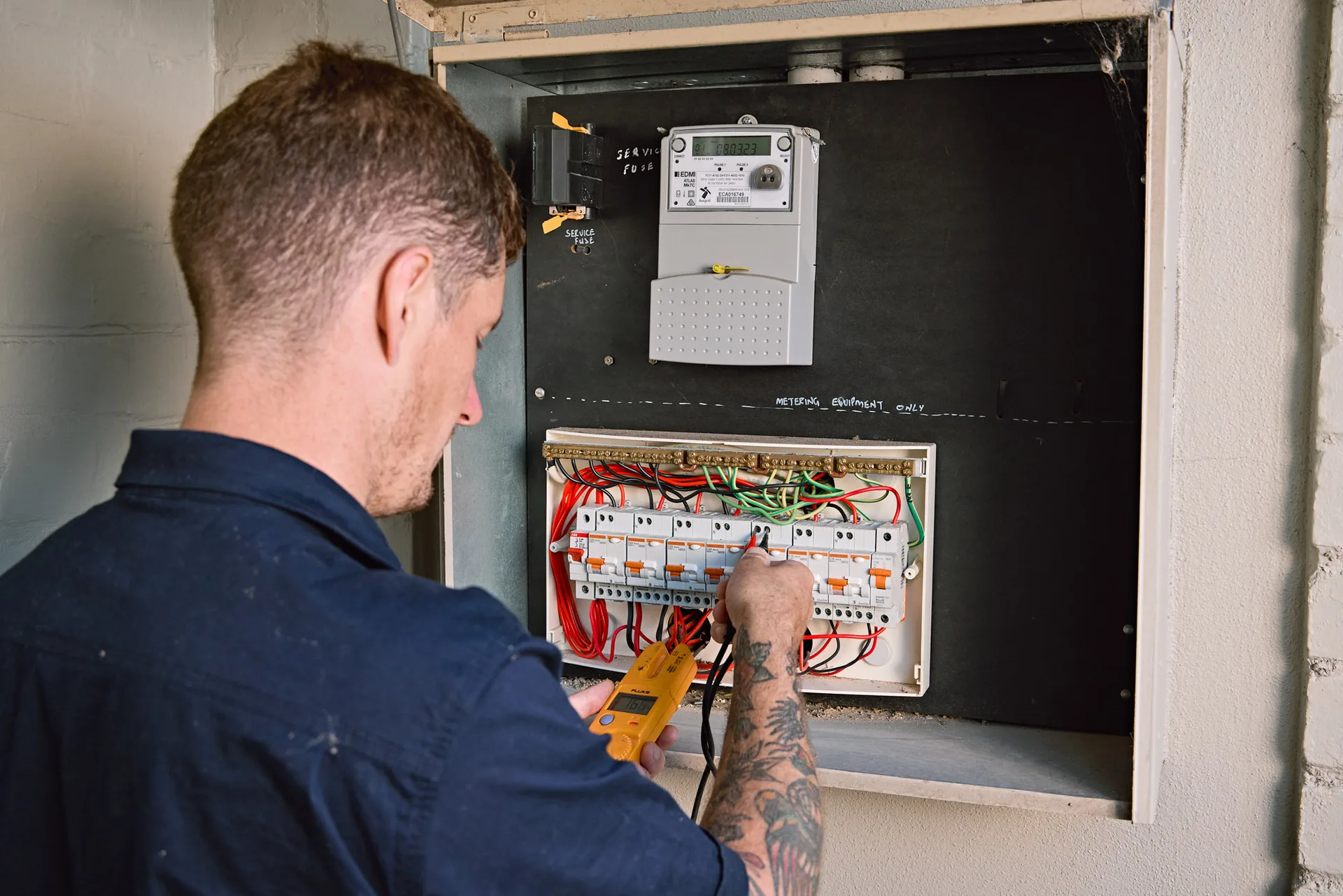
What a Tripped Circuit Breaker Actually Means
Think of a breaker as a self-acting switch that drops a circuit the second the current running through it climbs past a safe level.
It's protecting the wiring from overheating. Where an old-style fuse would blow and need replacing, a breaker simply flips off and waits to be reset, which makes it far easier to live with.
There's an important difference between two things that look similar on the board. A standard breaker trips on an overload or a short; a safety switch reacts to power escaping to earth, which is about protecting people from shock.
A single reset that stays put is nothing to worry about. Drop out again the moment you switch it back on, though, and there's a genuine fault behind it, which is the one we chase.
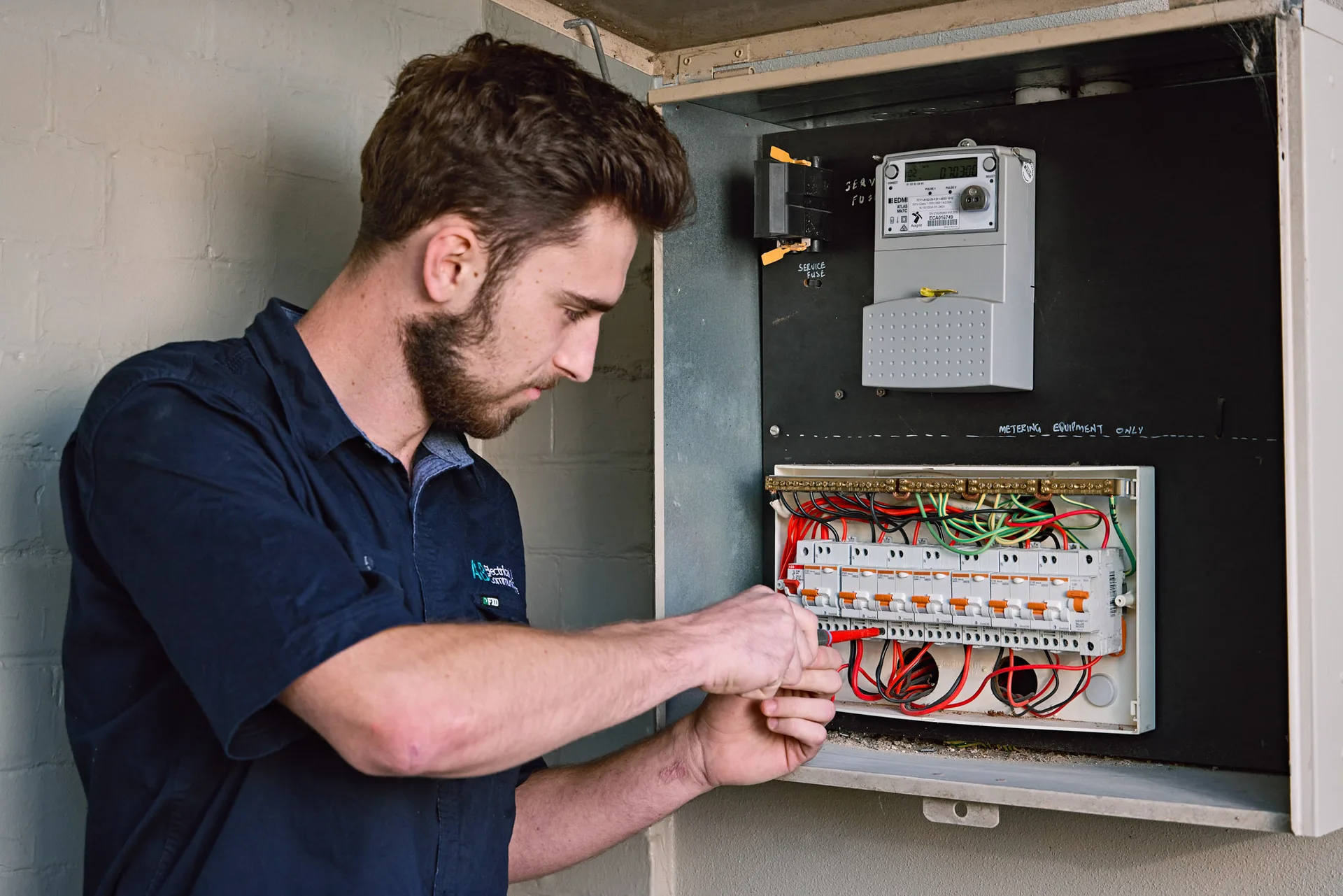
The Usual Reasons a Breaker Trips
Most tripping comes down to a small set of causes, and which one it is usually shows in the pattern of when it happens. Here they are, roughly most to least common.
- A circuit overload. Too many appliances drawing at once, tipping the circuit past its rating.
- A faulty appliance. A motor or heating element on its way out, drawing far more than it should.
- A short circuit. Two conductors touching where they shouldn't, causing a sudden current spike.
- An earth leakage fault. Current escaping to earth, which trips a safety switch rather than a standard breaker.
- A worn or faulty breaker. Older breakers can weaken and trip below their rating.
- Moisture in a circuit. Water reaching a fitting or outlet, common after leaks or in damp spaces.
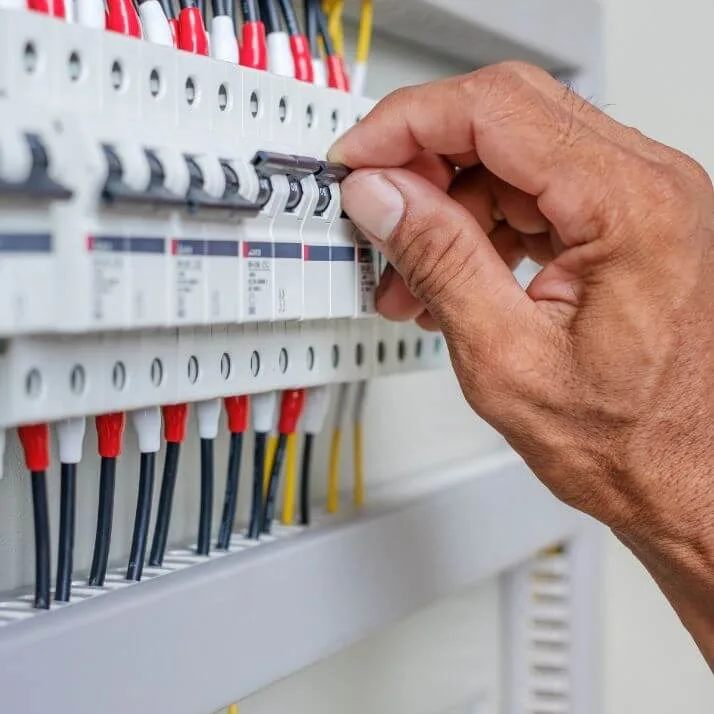
Should You Worry? An Honest Answer
A breaker that trips once and resets cleanly, after you plugged in one appliance too many, is routine and no cause for concern.
The picture changes when it won't reset at all, or drops out repeatedly with nothing much running. That points to a fault sitting in the wiring or a fixed appliance, not a one-off overload.
Any tripping that arrives with a burning smell, a warm switchboard, or scorching at the board is urgent. So is a safety switch that keeps cutting out, since that one is guarding against shock specifically.
Leave a stubborn breaker in the off position rather than forcing it, and keep whatever was running unplugged until it's checked.
A hot board or a burning smell: leave the mains off and ring (02) 9054 3079 right away.
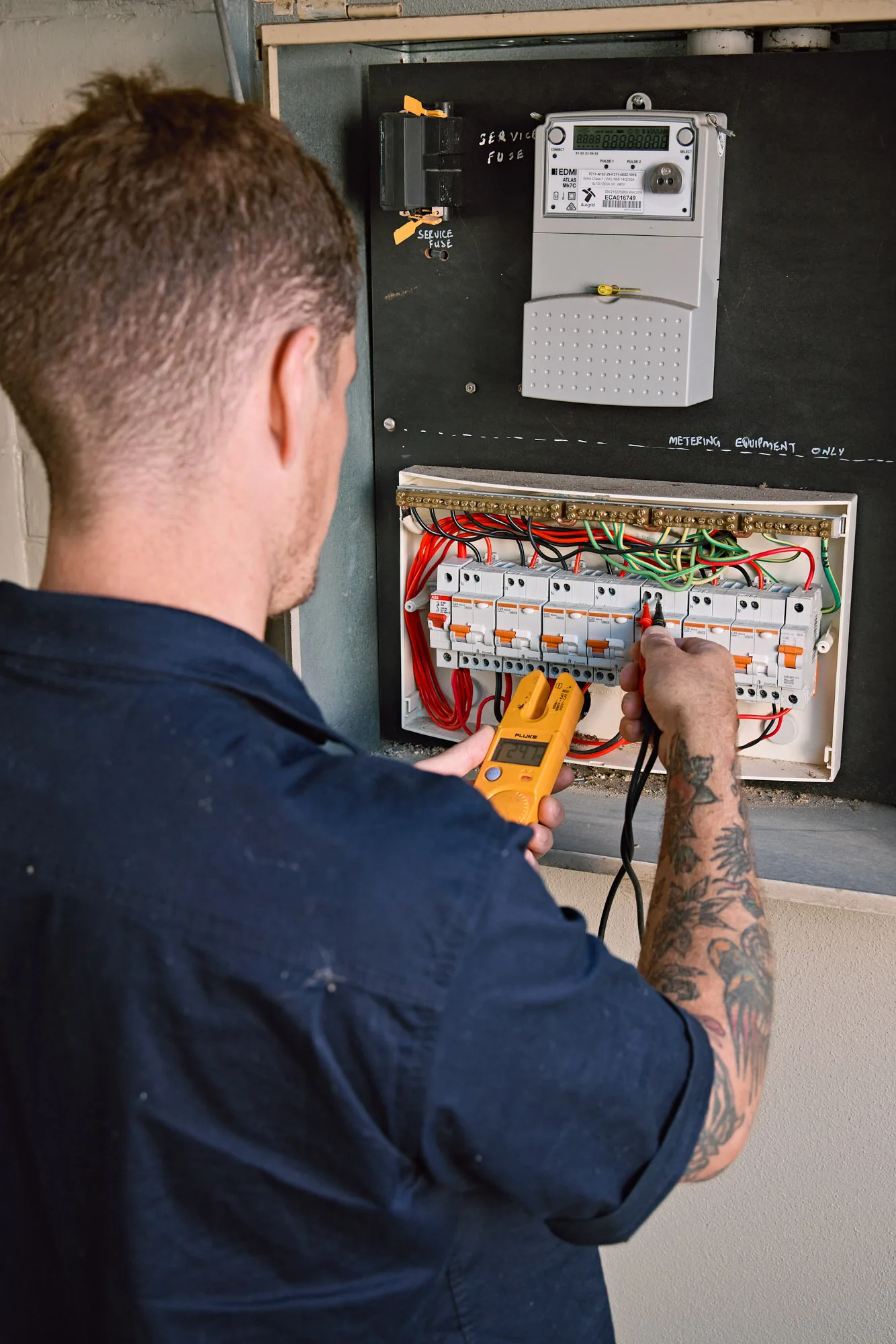
What To Do Right Now
- Reset it once. Switch the tripped breaker fully off, then back on. If it holds, note what was running when it went.
- Unplug and retry. If it trips again, disconnect the appliances on that circuit before the next reset.
- Stop after a second trip. A breaker that won't hold is telling you to stop resetting and get it checked.
How We Fix a Tripping Breaker for Good
We treat a repeat trip as a fault to find, not a breaker to keep flicking back on.
Testing tells us whether the circuit is genuinely overloaded, whether a short or an earth leakage is behind it, or whether the breaker itself has worn out and drops out early.
From there the fix might be splitting an overloaded circuit, repairing a section of faulty wiring, isolating a failing appliance, or replacing a tired breaker with the correct rating.
The repair is completed to AS/NZS 3000, and a compliance certificate is issued on any notifiable work, with the price set in writing before we begin.
A Local Angle on Tripped Circuit Breakers
The older terrace rows around Camperdown Park were wired for an era with far fewer appliances, so many still run a single circuit covering a large slice of the house.
When one breaker feeds the lights, the power points and the kitchen across half a home, it doesn't take much of a modern load to tip it over and trip.
Splitting that shared circuit into several, each with headroom, is the fix we most often end up recommending in these homes, and it usually ends the tripping for good.
How to Stop the Tripping Coming Back
A few targeted changes end most repeat tripping rather than just resetting around it. These are the ones that work.
- Spread the load across more circuits. More circuits on a modern board stop one breaker carrying too much.
- Track down the recurring fault. A proper fault-finding visit settles whether an appliance or the wiring is to blame.
- Add safety switches. RCD protection catches earth-leakage faults that put people at risk.
- Retire an ageing board. Worn breakers that trip early are worth replacing before they leave you in the dark.
Nearby Suburbs and Related Faults
A breaker tripping under heavy load and power points carrying too much are closely linked, so a fix for one often addresses the other.
If the tripping comes with lights that flicker or dim as it happens, the two usually share a single cause worth finding together.
Across the Inner West we cover Camperdown together with Newtown, Annandale and Marrickville.

Get in Touch Today Before It Gets Worse
A breaker you reset day after day is worth tracing to its real cause instead. Call (02) 9054 3079, often same or next day.
Every job carries a written quote up front and our lifetime workmanship guarantee.
Common questions
Common Tripped Circuit Breaker FAQs
Will my safety switch protect me?
A safety switch cuts out on current leaking to earth to guard against shock, which is a different job to a breaker stopping an overload. You want both doing their part on the board.
Why does it only trip at night or when certain appliances run?
That timing points to load. When the heater, kettle or dryer runs, the circuit tips over its limit, so the breaker cuts in to protect the wiring.
How long does the repair take?
A straightforward overload is usually sorted in one visit. Tracing an intermittent fault can take longer, and we'll give you a clear idea once we've had a look.
Is it my appliance or my wiring?
Often it's an appliance, and unplugging things one at a time can point to the culprit. When the breaker trips with nothing obvious running, the wiring needs checking.
How much does it cost to fix a tripping breaker?
You get a set price after we've found the cause, because an overload and a genuine wiring fault are different jobs. Quoting it costs you nothing.
Can I fix it myself?
You can safely reset a breaker once. Beyond that, working out why it keeps happening is licensed work under NSW law, not a DIY task.